
0
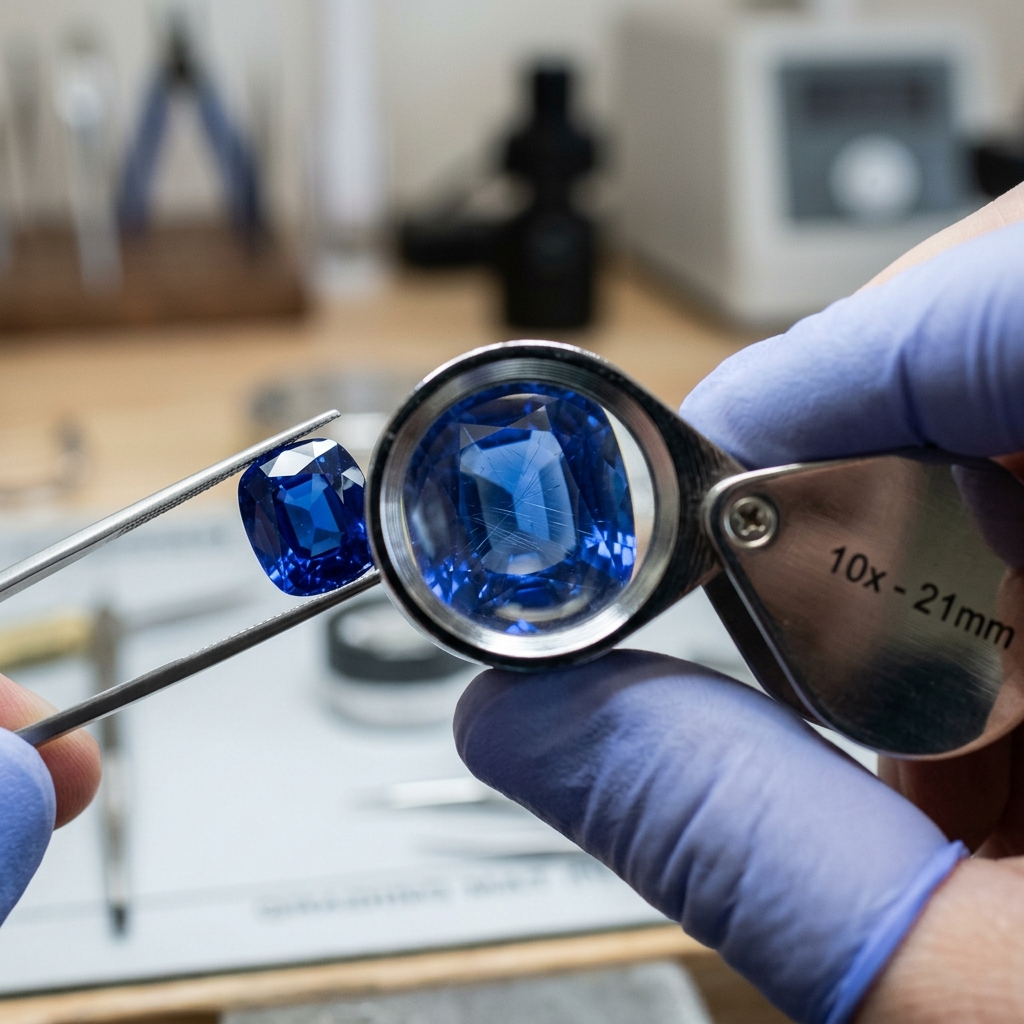
In a market flooded with synthetics and lab-grown alternatives, knowing how to identify a real Blue Sapphire is a vital skill for any collector or lover of custom handmade gemstone jewelry. Here is a guide to spotting the difference between a natural miracle and a laboratory creation.
Nature is rarely perfect. Natural sapphires almost always contain tiny internal characteristics called 'inclusions'. If a stone looks completely flawless under 10x magnification and is priced cheaply, it is likely synthetic. Look for 'silk'—fine rutile needles that are a hallmark of authentic Ceylon stones.
Fog the gemstone with your breath. On a natural sapphire, the fog should evaporate almost instantly (in 1-2 seconds). On a synthetic or glass imitation, the fog usually lingers for several seconds longer.
Natural stones often show uneven distribution of color, known as color zoning. Lab-grown stones typically have a perfectly uniform color that looks artificial. This is particularly important when looking for a rare Padparadscha Sapphire for sale, where the delicate pink-orange balance is unique to every natural stone.
Use a jeweler’s loupe to look for tiny air bubbles. Air bubbles are a clear sign of glass or synthetic flame-fusion stones. Natural sapphires do not have round air bubbles. Additionally, since sapphires are the second hardest mineral (9 on the Mohs scale), they should not be easily scratched.
Ultimately, the only way to be 100% certain is a professional laboratory report. Authentic dealers of investment grade gemstones will always provide a certificate from a recognized authority like GIA or GRS.
Shop with confidence. All our gemstones are certified and ethically sourced.
View Our Shop

Access your Safir account